Authority
Boundary, easement, utility, road, permit, and owner authorization.
Selective clearing for surveys, test pits, driveways, utility routes, building envelopes, drainage review, and civil work.
Estimate clearing cost↗Checked 2026-09-01
Selective clearing for surveys, test pits, driveways, utility routes, building envelopes, drainage review, and civil work. Mulcher and feller for the vegetation, with the excavation and grading as a separate, later mobilisation, handling Whatever the approved plan area contains. A planning range of 0.5–1.5 acres per day for the vegetation phase covers most projects — site prep production is normal mulching production. What makes the schedule is everything around it — the survey, the approvals, and the next trade's start date. The best window is whenever the approvals are actually in hand. On this scope the calendar is set by paperwork, not weather. It finishes only the approved plan area opened, and only to the marked limit, but not grubbing, grading, compaction or subgrade preparation — those are separate, separately-priced scopes.
Clearing too much, too soon can remove useful screening and create unnecessary erosion. Start with the survey, approved plan, and areas the next contractor actually needs.
Forestry mulching can improve visibility and equipment access, but it does not replace grubbing, stump removal, excavation, compaction, or final grading where construction requires them.
Best window: Whenever the approvals are actually in hand. On this scope the calendar is set by paperwork, not weather.
Avoid: Before the survey. Clearing an area the plan later moves is money spent twice and screening lost for nothing.
| Factor | What it does to the job |
|---|---|
| Approved area size | Priced off the plan, which is why the plan has to exist first. |
| Erosion control | Silt fence, stabilised construction entrance, matting and seed are materials and labour. |
| Phasing | Investigation access first, full envelope later, is usually cheaper and always lower-risk. |
| Retained screening | What stays is as much a spec as what goes, and it protects the finished property. |
| Coordination | Waiting on another trade with a machine on site is a real cost. |
| Included in this scope | Status |
|---|---|
| Only the approved plan area opened, and only to the marked limit | Finished by this scope |
| Survey lines, test-pit locations and the driveway corridor accessible | Finished by this scope |
| Enough visibility for geotechnical, septic and drainage investigation | Finished by this scope |
| Erosion controls in place before the disturbance, not after | Finished by this scope |
| Grubbing, grading, compaction or subgrade preparation | NOT finished — price separately |
| The stormwater permit, which the owner or the project engineer holds | NOT finished — price separately |
| Any expansion beyond the approved plan, however convenient | NOT finished — price separately |
Get the approved site plan with the limit of disturbance drawn on it, and have it staked. Site prep quoted off anything other than that document is quoted off a guess.
The expensive mistake: Clearing the envelope before the septic and drainage investigation. If the test results move the house, the cleared area is in the wrong place and the screening that would have hidden the new location is gone.
Doing it yourself: No — the stormwater and erosion obligations attach to the disturbance and the sequencing is a project-management job, not a weekend one.
Afterwards: The 14-day stabilisation clock under Vermont's Low Risk stormwater coverage starts at initial disturbance, not at the end of the project. If the next trade is six weeks out, the site still needs stabilising in the meantime.
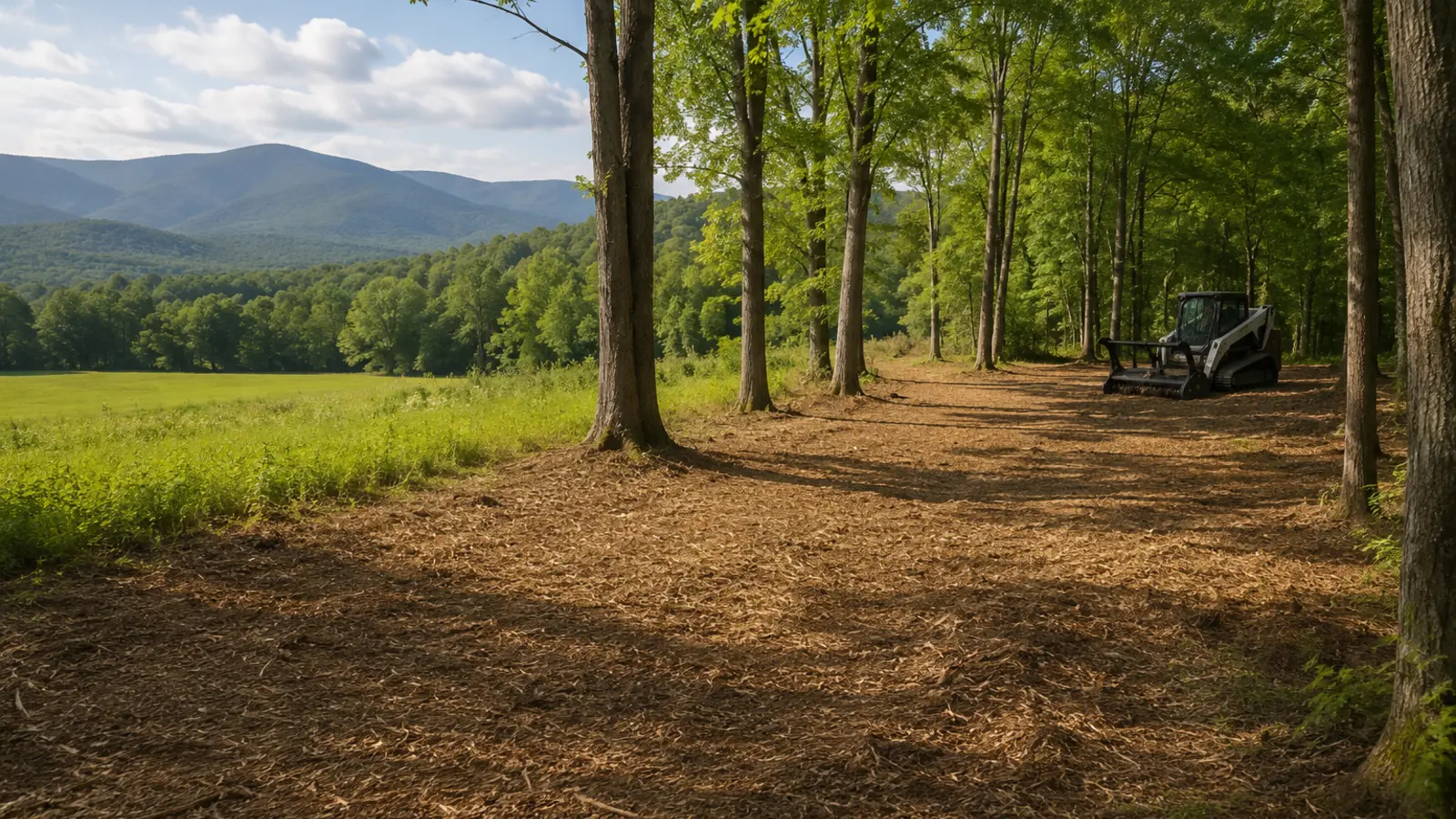
Use a signed map, one owner representative, work-hour limits, traffic or public protection, utility coordination, documentation, and a change-order process.
Separate mobilization, clearing, tree work, excavation, material hauling, erosion control, restoration, and recurring maintenance so responsibility is traceable.
For pre-construction site clearing, write what stays, what goes, how material is handled, where machines may travel, and what the land should support next.
Boundary, easement, utility, road, permit, and owner authorization.
Vegetation, stem size, rock, wetness, debris, grade, and stable access.
Mulch, mow, cut, chip, fell, excavate, haul, or use a sequenced mix.
Finish tolerance, material location, restoration, inspection, and maintenance.
The 2 rules below were read from the agency or the statute on the date shown against each one. Nothing here is a determination for your parcel — the authority named is the one whose answer counts.
1 acre — Vermont, Stormwater
Construction activity disturbing one acre or more of earth needs coverage under General Permit 3-9020 — and so does a smaller disturbance that is part of a larger common plan of development that will ultimately reach one acre.
Low Risk coverage caps concurrent disturbance at five acres and requires temporary or final stabilization within 14 days of the initial disturbance. Whether a mulching pass counts as "earth disturbance" depends on how much soil is exposed — ask the Stormwater Program before assuming it does not.
General Permit 3-9020 for Stormwater Runoff from Construction Sites · Vermont DEC Stormwater Program · checked 2026-09-01 · source
Act 250 jurisdiction turns on the purpose of the work, the acreage, whether the town has permanent zoning and subdivision bylaws, road construction, and prior activity within a five-mile radius over five years. The tier framework enacted in Act 181 of 2024 is still being phased in and the thresholds have moved during that phase-in.
Ask: Request a jurisdictional opinion from the District Coordinator for the district the parcel sits in. That opinion is the determination — no contractor estimate, map or calculator substitutes for it.
Vermont Natural Resources Board, District Commissions · source · checked 2026-09-01
50 ft — Vermont, Wetlands
A 50-foot buffer zone runs contiguous to the boundary of every Class II wetland, and most mapped wetlands in Vermont are Class II. Removing vegetation, filling, dredging, ditching, draining or grading inside the wetland or that buffer needs a Vermont Wetland Permit unless it is an Allowed Use under Section 6 of the rules.
Clearing vegetation is explicitly named in the regulated activities, so a mulching pass into a buffer is a permit question even though nothing is being built.
Vermont Wetland Rules; 10 V.S.A. Chapter 37 · Vermont DEC Wetlands Program · checked 2026-09-01 · source
Mulcher and feller for the vegetation, with the excavation and grading as a separate, later mobilisation. Selective clearing for surveys, test pits, driveways, utility routes, building envelopes, drainage review, and civil work. On a pre-Construction Site Clearing job the scope should name the marked work limit, the retained vegetation, how material is handled, and the finish standard — those four decide the price far more than the acreage does.
Whatever the approved plan area contains. That number is the single most useful thing to establish before anyone quotes pre-Construction Site Clearing, because it decides which machine comes and how many passes the work takes.
A planning range of 0.5–1.5 acres per day for the vegetation phase. Site prep production is normal mulching production. What makes the schedule is everything around it — the survey, the approvals, and the next trade's start date. This is a production screen, not a quote or a commitment to a schedule.
Mulcher and feller for the vegetation, with the excavation and grading as a separate, later mobilisation. Machine choice on a pre-Construction Site Clearing job follows the access route and the ground condition as much as the vegetation — a carrier that suits the work is no use if it cannot reach it.
Only the approved plan area opened, and only to the marked limit; Survey lines, test-pit locations and the driveway corridor accessible; Enough visibility for geotechnical, septic and drainage investigation; Erosion controls in place before the disturbance, not after. Anything beyond that list on a pre-Construction Site Clearing project belongs in a separate, separately-priced scope.
Grubbing, grading, compaction or subgrade preparation; The stormwater permit, which the owner or the project engineer holds; Any expansion beyond the approved plan, however convenient. Every one of those is a real and common expectation, which is why pre-Construction Site Clearing proposals should state them as exclusions rather than leaving them to be discovered at turnover.
Whenever the approvals are actually in hand. On this scope the calendar is set by paperwork, not weather.
Before the survey. Clearing an area the plan later moves is money spent twice and screening lost for nothing.
The 14-day stabilisation clock under Vermont's Low Risk stormwater coverage starts at initial disturbance, not at the end of the project. If the next trade is six weeks out, the site still needs stabilising in the meantime.
Approved area size — priced off the plan, which is why the plan has to exist first. Erosion control — silt fence, stabilised construction entrance, matting and seed are materials and labour. Phasing — investigation access first, full envelope later, is usually cheaper and always lower-risk. Retained screening — what stays is as much a spec as what goes, and it protects the finished property. Coordination — waiting on another trade with a machine on site is a real cost.
Clearing the envelope before the septic and drainage investigation. If the test results move the house, the cleared area is in the wrong place and the screening that would have hidden the new location is gone.
No — the stormwater and erosion obligations attach to the disturbance and the sequencing is a project-management job, not a weekend one.
Get the approved site plan with the limit of disturbance drawn on it, and have it staked. Site prep quoted off anything other than that document is quoted off a guess.
No. A planning range for pre-Construction Site Clearing is arithmetic on the numbers you entered — it has not seen the access route, the boundary, the wet ground, the rock, or the largest stem. Production alone spans 0.5–1.5 acres per day for the vegetation phase before anything else is considered, which is why a site review comes before a price.
It can, and on a pre-Construction Site Clearing job it is settled before the machine is scheduled — get the approved site plan with the limit of disturbance drawn on it, and have it staked. Site prep quoted off anything other than that document is quoted off a guess. One acre of earth disturbance triggers the Construction General Permit (General Permit 3-9020 for Stormwater Runoff from Construction Sites). Low Risk coverage caps concurrent disturbance at five acres and requires temporary or final stabilization within 14 days of the initial disturbance. Whether a mulching pass counts as "earth disturbance" depends on how much soil is exposed — ask the Stormwater Program before assuming it does not. Checked against Vermont DEC Stormwater Program on 2026-09-01. Because pre-Construction Site Clearing typically covers 0.5–1.5 acres per day for the vegetation phase, a stop part-way through for an approval that was never applied for costs more than the approval would have. The property owner is the applicant; a contractor's estimate is not a determination.
Act 250 jurisdiction turns on the purpose of the work, the acreage, whether the town has permanent zoning and subdivision bylaws, road construction, and prior activity within a five-mile radius over five years. The tier framework enacted in Act 181 of 2024 is still being phased in and the thresholds have moved during that phase-in. Request a jurisdictional opinion from the District Coordinator for the district the parcel sits in. That opinion is the determination — no contractor estimate, map or calculator substitutes for it. On a pre-Construction Site Clearing job specifically this comes before scheduling, not during: the machine handles Whatever the approved plan area contains, and it cannot tell the difference between what it is meant to cut and what it is not.
It can, and on a pre-Construction Site Clearing job it is settled before the machine is scheduled — get the approved site plan with the limit of disturbance drawn on it, and have it staked. Site prep quoted off anything other than that document is quoted off a guess. Class II wetlands carry a 50-foot buffer zone (Vermont Wetland Rules; 10 V.S.A. Chapter 37). Clearing vegetation is explicitly named in the regulated activities, so a mulching pass into a buffer is a permit question even though nothing is being built. Checked against Vermont DEC Wetlands Program on 2026-09-01. Because pre-Construction Site Clearing typically covers 0.5–1.5 acres per day for the vegetation phase, a stop part-way through for an approval that was never applied for costs more than the approval would have. The property owner is the applicant; a contractor's estimate is not a determination.
Share the location, acreage, density, slope, access, photos, and intended outcome. We’ll turn the idea into a scope that can be evaluated on the property.
Request a site assessment↗Open the cost calculator →