Request a site assessment
Land capability

Brush Hogging & Field Reclamation

Heavy mowing for grass, weeds, brambles, light brush, neglected fields, and recurring acreage maintenance.

Estimate clearing cost
Direct answer

What is brush hogging and when does a field need mulching instead?

Checked 2026-09-01

Heavy mowing for grass, weeds, brambles, light brush, neglected fields, and recurring acreage maintenance. A tractor with a rotary cutter, or a skid steer with a heavy-duty brush mower on rougher ground, handling 1–2 inches. Above that the mower is the wrong tool and something will break.. A planning range of 2–5 acres per day covers most projects — the fastest scope on this site by area, because the material is light and the machine drives a pattern. The number collapses the moment the field turns out to contain woody stems, rock, or ground that has become uneven. The best window is mid to late summer, after the ground has dried and before woody growth hardens off. A second late-season pass keeps a field genuinely maintained rather than annually rescued. It finishes grass, weeds, brambles and light brush cut back to a mowed height, but not anything woody. Sapling stems damage a rotary cutter and are left as spikes. — those are separate, separately-priced scopes.

In practice

Reset mowable ground before growth becomes woodland.

Brush hogging works best where material is within the mower’s capacity and the terrain is known. Hidden rock, wire, stumps, holes, wet areas, and woody stems can change the method.

If the site has become dense sapling growth, forestry mulching may be more appropriate for the first reset, followed by routine mowing once the ground is manageable.

Best window: Mid to late summer, after the ground has dried and before woody growth hardens off. A second late-season pass keeps a field genuinely maintained rather than annually rescued.

Avoid: Wet ground, where a tractor makes ruts that are then permanent, and full spring nesting season on ground being managed for habitat.

What drives the cost of brush hogging & field reclamation
FactorWhat it does to the job
Woody contentThe presence of any real woody stems changes the machine and therefore the price.
Hidden hazardsRock, wire, stumps and holes are what break rotary cutters, and a field that ate one is priced differently.
TerrainRough or sloped ground slows a tractor far more than a slightly denser stand does.
AcreageThis is the one scope where acreage genuinely drives the number, because the rate is stable.
AccessGate width and a route in that suits a tractor and a trailer.
Brush Hogging & Field Reclamation: what it finishes and what it does not
Included in this scopeStatus
Grass, weeds, brambles and light brush cut back to a mowed heightFinished by this scope
A field visibly reset and inspectableFinished by this scope
A maintenance interval established that keeps it that wayFinished by this scope
Anything woody. Sapling stems damage a rotary cutter and are left as spikes.NOT finished — price separately
The ground surface — mowing does not level ruts, holes or hummocksNOT finished — price separately
A first reset on ground that has already gone to saplings; that is a mulching jobNOT finished — price separately
Before you call

The one thing worth measuring first

Walk the field and flag every hard object you find. Then check the stems — if a meaningful number are thicker than your thumb, ask about mulching for the first pass instead.
The expensive mistake: Using a brush hog to discover hazards. Every rock, buried post and old axle in the field gets found by the blade at speed, and the cost of finding one that way exceeds the cost of walking the field first.

Doing it yourself: Very much yes, if the landowner has or can rent a tractor and the field is known and reasonably flat. This is the scope most likely to be worth owning the equipment for, because the interval is annual and forever.

Afterwards: This scope is the follow-up. Once a field is on an annual or twice-yearly interval it stays a field; skip three years and it becomes a mulching job again.

Selective vegetation clearing with retained trees and processed material
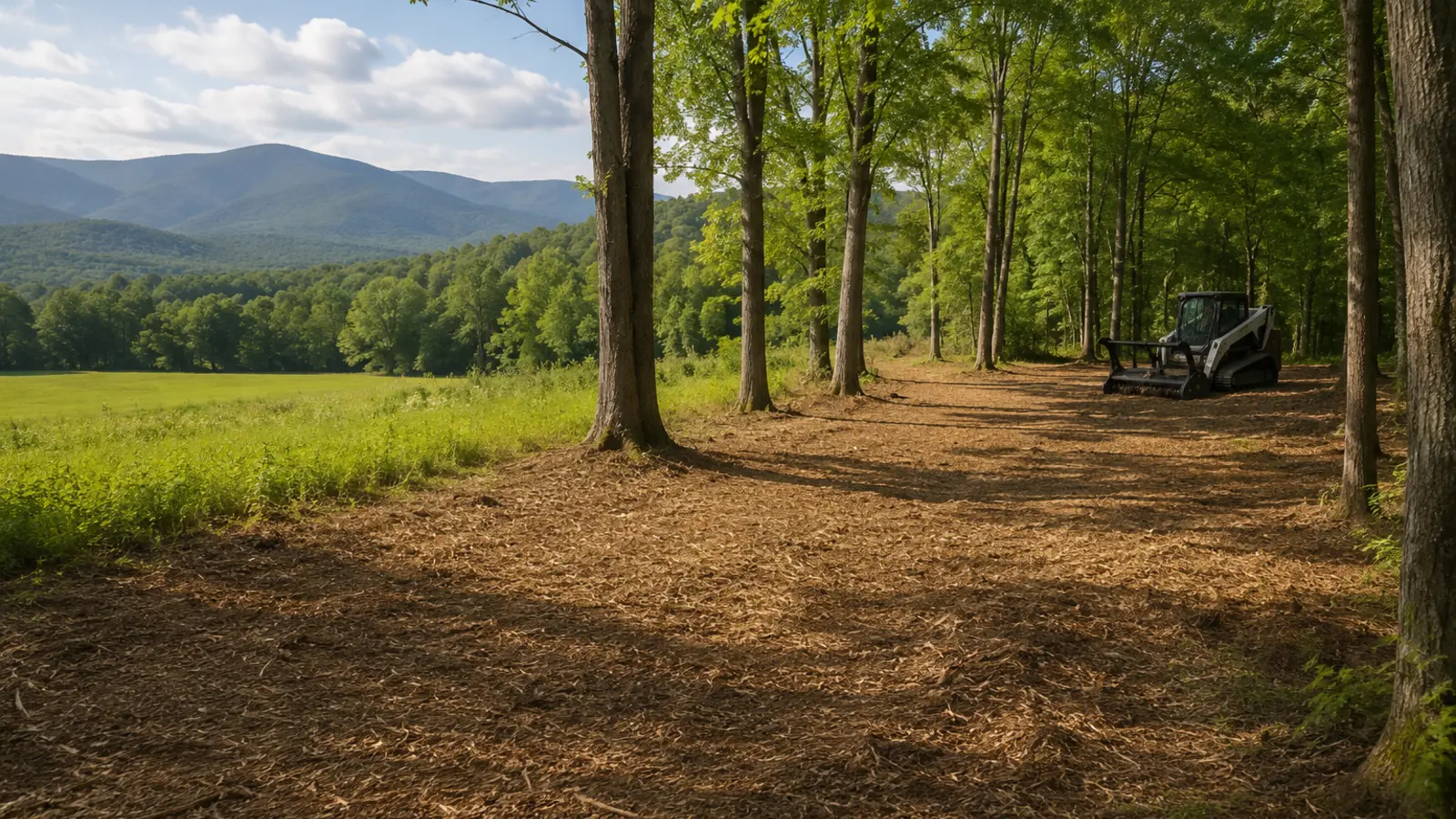
Illustrative finish, not a project claim. Actual results follow the marked work limit, vegetation, terrain, soil, access, and written turnover standard.
Field decision

Clear for the next land use

Pasture, orchard, sugarbush, hunting, trail, and farm projects succeed when the clearing width and finish match the next operation.

Coordinate soil, seed, fencing, water, drainage, crop, forestry, or habitat decisions with the appropriate professional after access is restored.

For brush hogging & field reclamation, write what stays, what goes, how material is handled, where machines may travel, and what the land should support next.
A four-part project screen
01

Authority

Boundary, easement, utility, road, permit, and owner authorization.

02

Ground

Vegetation, stem size, rock, wetness, debris, grade, and stable access.

03

Method

Mulch, mow, cut, chip, fell, excavate, haul, or use a sequenced mix.

04

Closeout

Finish tolerance, material location, restoration, inspection, and maintenance.

Quote boundaries

Keep adjacent trades out of the gray area.

Define in this scopePastures and hayfield edgesOvergrown lawns and meadowsAnnual or seasonal maintenancePre-inspection mowing
Price or verify separatelyTechnical tree work and riggingStump or root excavationGrading, drainage, and soilPermits, traffic control, treatment, or restoration
Verified against the primary source

What the rules say about brush hogging & field reclamation

The questions below have no single published answer, so each names the office to ask rather than a figure to trust. Nothing here is a determination for your parcel — the authority named is the one whose answer counts.

What is buried in the work area?

Underground facilities are not visible from an aerial photo and a mulching head does not stop for them. Locating is a legal obligation before excavation in all three states, and the free national number routes to each state's own centre.

Ask: Call 811 before the machine moves, and separately mark private lines the public locate does not cover — well lines, septic, invisible fence, LP gas runs from a tank, irrigation, and anything a previous owner installed.

Dig Safe / 811 · source · checked 2026-09-01

Where is the line, exactly?

Clearing across a boundary is a trespass and in all three states timber trespass carries multiplied damages. Old wire, stone walls and hedgerows are evidence of a line, not proof of one, and brush hides all three.

Ask: Have the owner mark the limit of work on the ground before the crew arrives, and get a licensed surveyor where the line is uncertain, disputed, or within the width of the machine.

A Vermont, New York or New Hampshire licensed land surveyor · checked 2026-09-01

Field questions

Know what the machine can—and cannot—solve.

01What does brush Hogging & Field Reclamation actually involve?

A tractor with a rotary cutter, or a skid steer with a heavy-duty brush mower on rougher ground. Heavy mowing for grass, weeds, brambles, light brush, neglected fields, and recurring acreage maintenance. On a brush Hogging & Field Reclamation job the scope should name the marked work limit, the retained vegetation, how material is handled, and the finish standard — those four decide the price far more than the acreage does.

02What is the largest stem brush Hogging & Field Reclamation can handle?

1–2 inches. Above that the mower is the wrong tool and something will break.. That number is the single most useful thing to establish before anyone quotes brush Hogging & Field Reclamation, because it decides which machine comes and how many passes the work takes.

03How much ground can brush Hogging & Field Reclamation cover in a day?

A planning range of 2–5 acres per day. The fastest scope on this site by area, because the material is light and the machine drives a pattern. The number collapses the moment the field turns out to contain woody stems, rock, or ground that has become uneven. This is a production screen, not a quote or a commitment to a schedule.

04What equipment is used for brush Hogging & Field Reclamation?

A tractor with a rotary cutter, or a skid steer with a heavy-duty brush mower on rougher ground. Machine choice on a brush Hogging & Field Reclamation job follows the access route and the ground condition as much as the vegetation — a carrier that suits the work is no use if it cannot reach it.

05What does brush Hogging & Field Reclamation actually finish?

Grass, weeds, brambles and light brush cut back to a mowed height; A field visibly reset and inspectable; A maintenance interval established that keeps it that way. Anything beyond that list on a brush Hogging & Field Reclamation project belongs in a separate, separately-priced scope.

06What does brush Hogging & Field Reclamation not finish?

Anything woody. Sapling stems damage a rotary cutter and are left as spikes.; The ground surface — mowing does not level ruts, holes or hummocks; A first reset on ground that has already gone to saplings; that is a mulching job. Every one of those is a real and common expectation, which is why brush Hogging & Field Reclamation proposals should state them as exclusions rather than leaving them to be discovered at turnover.

07When is the best time of year for brush Hogging & Field Reclamation?

Mid to late summer, after the ground has dried and before woody growth hardens off. A second late-season pass keeps a field genuinely maintained rather than annually rescued.

08When should brush Hogging & Field Reclamation be avoided?

Wet ground, where a tractor makes ruts that are then permanent, and full spring nesting season on ground being managed for habitat.

09What happens on the property after brush Hogging & Field Reclamation is done?

This scope is the follow-up. Once a field is on an annual or twice-yearly interval it stays a field; skip three years and it becomes a mulching job again.

10What drives the cost of brush Hogging & Field Reclamation?

Woody content — the presence of any real woody stems changes the machine and therefore the price. Hidden hazards — rock, wire, stumps and holes are what break rotary cutters, and a field that ate one is priced differently. Terrain — rough or sloped ground slows a tractor far more than a slightly denser stand does. Acreage — this is the one scope where acreage genuinely drives the number, because the rate is stable. Access — gate width and a route in that suits a tractor and a trailer.

11What is the most expensive mistake on a brush Hogging & Field Reclamation project?

Using a brush hog to discover hazards. Every rock, buried post and old axle in the field gets found by the blade at speed, and the cost of finding one that way exceeds the cost of walking the field first.

12Can a landowner do brush Hogging & Field Reclamation themselves?

Very much yes, if the landowner has or can rent a tractor and the field is known and reasonably flat. This is the scope most likely to be worth owning the equipment for, because the interval is annual and forever.

13What should I measure before asking about brush Hogging & Field Reclamation?

Walk the field and flag every hard object you find. Then check the stems — if a meaningful number are thicker than your thumb, ask about mulching for the first pass instead.

14Is an online range for brush Hogging & Field Reclamation a quote?

No. A planning range for brush Hogging & Field Reclamation is arithmetic on the numbers you entered — it has not seen the access route, the boundary, the wet ground, the rock, or the largest stem. Production alone spans 2–5 acres per day before anything else is considered, which is why a site review comes before a price.

15What is buried in the work area? — how does that apply to brush Hogging & Field Reclamation?

Underground facilities are not visible from an aerial photo and a mulching head does not stop for them. Locating is a legal obligation before excavation in all three states, and the free national number routes to each state's own centre. Call 811 before the machine moves, and separately mark private lines the public locate does not cover — well lines, septic, invisible fence, LP gas runs from a tank, irrigation, and anything a previous owner installed. On a brush Hogging & Field Reclamation job specifically this comes before scheduling, not during: the machine handles 1–2 inches. Above that the mower is the wrong tool and something will break., and it cannot tell the difference between what it is meant to cut and what it is not.

16Where is the line, exactly? — how does that apply to brush Hogging & Field Reclamation?

Clearing across a boundary is a trespass and in all three states timber trespass carries multiplied damages. Old wire, stone walls and hedgerows are evidence of a line, not proof of one, and brush hides all three. Have the owner mark the limit of work on the ground before the crew arrives, and get a licensed surveyor where the line is uncertain, disputed, or within the width of the machine. On a brush Hogging & Field Reclamation job specifically this comes before scheduling, not during: the machine handles 1–2 inches. Above that the mower is the wrong tool and something will break., and it cannot tell the difference between what it is meant to cut and what it is not.

Start with the site

Turn brush hogging & field reclamation into a marked scope.

Share the location, acreage, density, slope, access, photos, and intended outcome. We’ll turn the idea into a scope that can be evaluated on the property.

Request a site assessmentOpen the cost calculator →